Home » Blog » Emergency Dentistry » When Should You See an Emergency Dentist in Edmonton? A Complete Guide
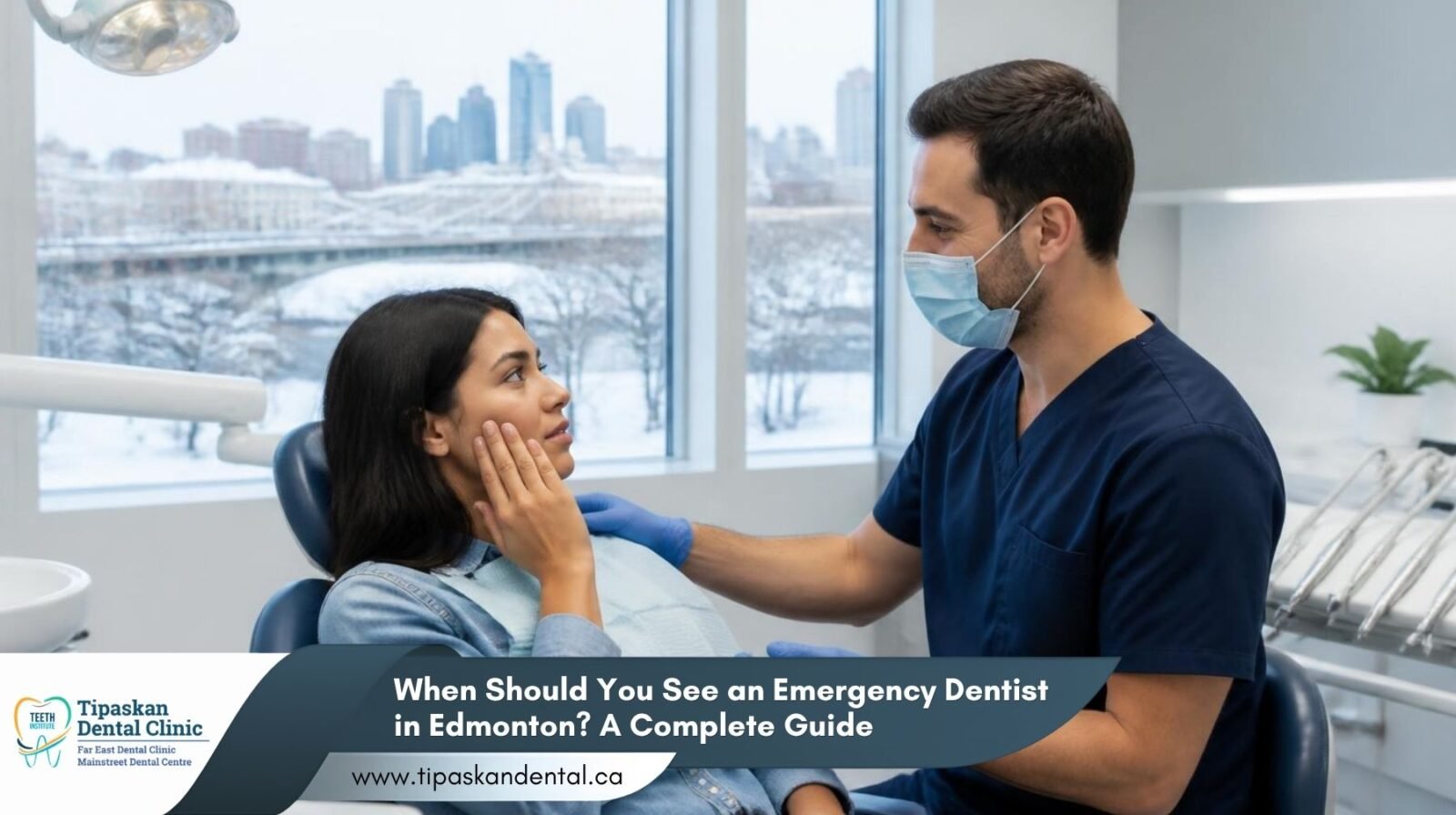
A sudden toothache, broken tooth, swelling, or dental injury can leave you wondering whether you should wait for a regular appointment or seek immediate care. Knowing when to see an emergency dentist in Edmonton can help you respond quickly and make informed decisions about your dental health.
Not every dental problem is an emergency. However, severe pain, significant swelling, dental trauma, uncontrolled bleeding, or signs of infection may require prompt professional attention.
This guide explains the most common reasons to seek emergency dental care, what you can do before your appointment, and how timely treatment can help protect your teeth and oral health.
Emergency dental care is professional treatment for dental problems that require prompt assessment because of pain, injury, infection, swelling, bleeding, or significant damage.
An emergency dentist evaluates the condition of the affected tooth and surrounding tissues and determines what treatment may be appropriate.
Common dental emergencies include:
If you are unsure whether your symptoms require urgent attention, understanding what is considered a dental emergency can help you recognize situations that may need prompt care.
The most important factor is the severity and progression of your symptoms.
You should consider contacting an emergency dentist in Edmonton when a dental problem is causing significant pain, swelling, injury, bleeding, or other symptoms that cannot reasonably wait for a routine appointment.
A sudden or intense toothache can interfere with sleeping, eating, working, and everyday activities.
Tooth pain can have several causes, including decay, damage, inflammation, infection, or problems affecting the tissues inside the tooth.
Seek urgent dental assessment if your pain:
Pain medication may provide temporary relief, but it does not identify or resolve the underlying dental problem.
For additional information, see Emergency Dentistry in Edmonton.
A tooth can become damaged after an accident, sports injury, biting down on something hard, or because the tooth has already been weakened.
A small chip may not always require emergency treatment. However, a significant fracture or break should be assessed promptly, especially if you experience pain or sensitivity.
A damaged tooth may be more vulnerable to additional injury. Depending on the condition of the tooth, treatment may involve restorative care.
Read Broken or Chipped Teeth: Restorative Dentistry to learn more about how damaged teeth may be treated.
A knocked-out permanent tooth is an urgent dental concern.
If a tooth is completely displaced following an injury, seek professional dental care as quickly as possible. Handle the tooth carefully and avoid touching the root.
Do not assume that the absence of pain means the injury is minor. Dental trauma can affect the tooth and surrounding tissues even when symptoms are not immediately severe.
If the injury also involves serious facial trauma, difficulty breathing, or other potentially life-threatening symptoms, seek emergency medical attention.
Dental swelling can sometimes be associated with infection or inflammation.
Swelling may occur around a tooth, gum, cheek, or jaw. It becomes especially important to seek prompt assessment when it is accompanied by:
A dental infection should not be ignored because symptoms can change over time.
An untreated dental infection may cause pain, swelling, tenderness, drainage, or other symptoms.
Possible signs include:
If you notice these symptoms, contact a dental professional for an assessment.
Our article Signs You Need Emergency Dental Care Immediately provides more information about warning signs that should not be ignored.
Minor bleeding can occur after an injury to the mouth. However, bleeding that continues despite gentle pressure may require prompt professional attention.
If significant bleeding follows a dental injury or procedure, contact a dental professional and explain what happened.
If the bleeding is severe or associated with a serious facial injury, emergency medical care may be appropriate.
Fillings and other dental restorations can sometimes become loose or fall out.
A lost filling does not automatically mean that you need emergency treatment. However, prompt dental care may be appropriate if:
Our guide From Fillings to Extractions: Emergency Dental Care explains how dental problems can require different treatment approaches depending on their severity.
It can be difficult to decide whether a problem is urgent.
A simple way to assess the situation is to consider pain, damage, swelling, bleeding, and how quickly the symptoms are changing.
If you are uncertain, contacting a dental clinic and explaining your symptoms is a practical way to determine what type of care may be appropriate.
While waiting for professional dental care, a few simple steps may help protect the affected area.
Rinse your mouth gently with water and avoid chewing on the affected side. If you can safely collect the broken fragment, keep it and bring it with you to the dental appointment.
Keep your mouth clean and avoid foods or drinks that make the pain worse. Arrange a dental assessment instead of relying solely on temporary pain relief.
Handle the tooth carefully and avoid touching the root. Seek dental care as quickly as possible.
A cold compress against the outside of the face may provide temporary comfort. However, swelling that may be related to an infection still requires professional assessment.
Keep the area clean and avoid chewing directly on the affected tooth until it can be examined.
These steps are temporary measures and should not replace professional dental care.
If you have never visited an emergency dentist before, you may wonder what to expect.
Your appointment will generally begin with a discussion about your symptoms and an examination of the affected area.
Depending on your situation, the dental team may:
The treatment depends on the specific dental condition.
A damaged tooth may require restorative treatment. An infected tooth may require different treatment, while a severely damaged tooth may require more extensive care.
For a broader look at restorative treatment, visit Restorative Dentistry in Edmonton.
In some situations, prompt dental treatment can help preserve a damaged tooth. However, the outcome depends on the type and extent of the damage.
A tooth affected by decay, a fracture, or another problem may sometimes be repaired or restored. Depending on the condition, treatment could involve restorative procedures or root canal treatment.
In other situations, extraction may need to be considered.
If you are experiencing dental pain and are concerned about saving your tooth, our guide Root Canal vs. Tooth Extraction in Edmonton explains some of the factors that may influence treatment decisions.
Waiting too long to address a serious dental problem can allow the underlying condition to progress.
For example, untreated decay can continue affecting a tooth, while an infection may cause increasing discomfort and swelling. A damaged tooth can also become more vulnerable to further breakage.
Prompt professional assessment allows the dentist to understand what is happening and determine whether immediate treatment or follow-up care is appropriate.
Emergency dentistry is therefore about more than managing discomfort. It is also about evaluating the cause of the problem and protecting your oral health.
Not every dental emergency can be prevented, but good oral care can help reduce the risk of many common dental problems.
Brush regularly, clean between your teeth, and follow your dentist’s recommendations for maintaining healthy teeth and gums.
Routine dental examinations can help identify problems before they become painful or urgent.
For ongoing preventive care, explore General Dentistry Services in Edmonton.
Sensitivity, mild tooth pain, or a small crack may seem insignificant, but reporting changes early gives your dentist an opportunity to assess them.
If you participate in contact sports or activities where facial injuries are possible, appropriate dental protection can help reduce the risk of tooth damage.
Do not use your teeth to open packages, cut materials, or bite objects that could cause them to chip or fracture.
When you need urgent dental care, choose a clinic that can assess your symptoms and explain your treatment options clearly.
Consider:
Choosing a dental clinic that can provide both urgent and general dental care can make it easier to maintain continuity of care after an emergency.
You can also read How to Choose the Best Dentist in Edmonton for additional considerations when selecting dental care.
You should consider seeing an emergency dentist when you have severe or worsening tooth pain, significant swelling, a knocked-out or seriously damaged tooth, uncontrolled bleeding, signs of infection, or significant dental trauma.
Dental emergencies can include severe tooth pain, major tooth damage, a knocked-out permanent tooth, significant swelling, possible dental infection, uncontrolled bleeding, and serious dental injuries.
A severe, persistent, or worsening toothache should be professionally assessed. Tooth pain can have several causes, including decay, infection, inflammation, or tooth damage.
Yes. An emergency dentist can assess a broken tooth and determine whether it may be repaired or whether additional restorative treatment is needed. The appropriate treatment depends on the extent of the damage.
Handle the tooth carefully without touching the root and seek professional dental care as quickly as possible. Do not delay assessment simply because the injury is not painful.
It depends on the severity of your symptoms. Severe pain, significant swelling, serious dental trauma, uncontrolled bleeding, or symptoms suggesting infection should be assessed promptly rather than automatically waiting for a routine appointment.
A dental emergency can be stressful, but knowing when to seek professional care can help you respond appropriately. Severe pain, swelling, dental injuries, broken teeth, infections, and other urgent symptoms should not be ignored.
If you are looking for an emergency dentist in Edmonton, Tipaskan Dental Clinic can assess your dental concern and help determine the appropriate next step.
Tipaskan Dental Clinic
3228 82 St NW
Edmonton, AB T6K 3Y3
Phone: +1 (780) 462-1010
Email: Info@tipaskandental.ca
Hours: Monday to Saturday, 9:00 AM to 5:00 PM
If you are experiencing a dental problem that may require urgent attention, contact Tipaskan Dental Clinic to discuss your symptoms and arrange appropriate dental care.

Tipaskan Dental provides personalized dental care for individuals and families in Mill Woods and Southeast Edmonton.
©2026 Tipaskan Dental – Precision In Dental Care, Perfection In Web Design — Webital Technologies & Signages