Home » Blog » Emergency Dentistry » Broken, Cracked or Knocked-Out Tooth: What to Do Before Seeing an Emergency Dentist
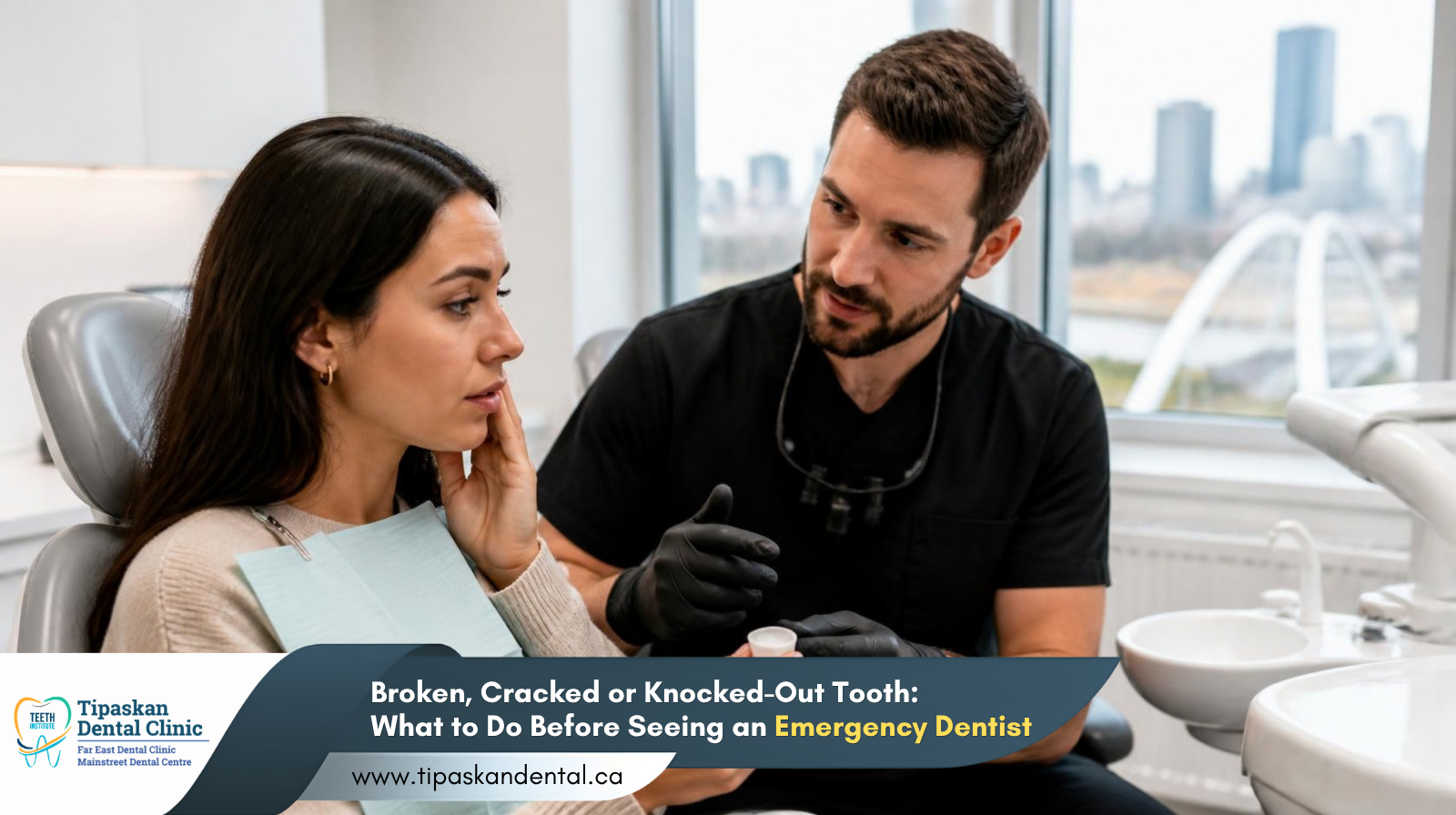
A broken, cracked, or knocked-out tooth can happen suddenly—from a sports injury, accident, fall, biting something hard, or an untreated dental problem. When it happens, knowing what to do in the first few minutes can help protect the tooth and reduce the risk of further damage.
If you are dealing with a serious tooth injury, contacting an emergency dentist in Edmonton as soon as possible is important. While you arrange dental care, there are a few practical steps you can take to protect the affected area.
A knocked-out permanent tooth is particularly time-sensitive because prompt treatment may improve the possibility of saving the natural tooth. A cracked or broken tooth may also require urgent assessment, especially when there is significant pain, bleeding, swelling, or sensitivity.
This guide explains what to do before seeing an emergency dentist in Edmonton, what you should avoid, and when a tooth injury requires immediate professional attention.
After breaking, cracking, or losing a tooth, try to stay calm and assess the situation.
Your first steps should include:
If the injury also involves significant facial trauma, uncontrolled bleeding, difficulty breathing or swallowing, or another potentially serious medical problem, seek emergency medical care immediately.
Dental injuries can sometimes look minor while involving deeper damage beneath the visible surface. A professional examination can help determine whether the tooth’s inner structures, root, or surrounding tissues have also been affected.
A broken tooth can range from a small chip to a large fracture involving a significant portion of the tooth.
If part of your tooth has broken off, gently rinse your mouth with water to remove debris. If you can find the broken piece, keep it and bring it with you to your dental appointment.
Avoid chewing on the damaged tooth until it has been examined. Hard, crunchy, sticky, or very hot and cold foods may increase discomfort or cause additional damage.
If there is bleeding, gently apply clean gauze or a clean cloth to the area with light pressure.
A broken tooth may sometimes be repaired with a filling or bonding, while more extensive damage may require restorative treatment such as a crown or root canal therapy. The appropriate treatment depends on how much of the tooth has been damaged and whether the inner portion of the tooth has been affected.
For more information about treatment options for damaged teeth, see our guide to restorative dentistry in Edmonton.
A fractured tooth can leave a sharp edge that irritates your tongue, cheek, or gums.
Until you can see a dentist:
Do not attempt to file, cut, or reshape the tooth yourself. This could remove additional tooth structure and make the injury worse.
A cracked tooth can be more difficult to recognize because the crack may not always be visible.
You may experience:
If you suspect that a tooth is cracked, avoid chewing on it and arrange a dental examination.
A crack can sometimes extend deeper into the tooth over time. The sooner the dentist evaluates the tooth, the sooner they can determine the extent of the damage and discuss appropriate treatment.
Do not try to test the tooth repeatedly by biting hard foods. Repeated pressure can potentially worsen an existing crack.
A completely knocked-out permanent tooth is a dental emergency.
The most important thing is to act quickly.
Look for the tooth and pick it up carefully.
Hold the tooth by the crown—the part normally visible in the mouth. Avoid touching the root.
The root contains delicate tissues that may be important when a dentist attempts to reposition the tooth.
If the tooth is dirty, gently rinse it with water.
Do not scrub the tooth, scrape it, or use cleaning chemicals. Avoid aggressively handling the root.
For a permanent tooth, if you are comfortable doing so and it can be repositioned easily, you may gently place it back into the socket.
Do not force it.
If you cannot safely place the tooth back into the socket, keep it moist and take it with you when seeking dental care.
The Alberta Dental Association recommends acting quickly after a permanent tooth is knocked out because the sooner the tooth is replaced, the better the possibility of successful reattachment.
If you cannot put the tooth back into its socket, keep it moist.
Milk can be used as a temporary storage medium while you travel to the dentist. Depending on the circumstances, keeping the tooth moist in the mouth may also be an option for an adult who can safely do so.
Do not allow the tooth to dry out.
Do not wait until the next regular dental appointment if a permanent tooth has been completely knocked out.
Contact an emergency dentist in Edmonton and explain that the tooth has been knocked out. Tell the dental team when the injury happened and what you have done with the tooth.
Timing matters in this type of dental emergency.
A knocked-out baby tooth should be handled differently from a permanent adult tooth.
Do not try to put a knocked-out baby tooth back into the socket. Doing so could potentially interfere with the developing permanent tooth underneath.
Instead:
Parents should also watch for other signs of trauma, including bleeding, swelling, persistent pain, or damage to nearby teeth.
If your child has a dental injury, our guide to pediatric emergency dental care in Edmonton provides additional information about what parents should know.
Some bleeding can occur after a tooth injury, particularly when the gums or surrounding tissues have been damaged.
If the area is bleeding:
If bleeding is severe or cannot be controlled, seek emergency medical care.
A serious mouth injury can involve more than the tooth itself, so significant bleeding should not be ignored.
Swelling can occur after dental trauma.
A cold compress applied to the outside of the cheek can help reduce swelling and discomfort while you arrange professional care.
Use the cold compress for short periods rather than placing ice directly against the skin.
You should seek prompt dental assessment if swelling is significant, worsening, or associated with severe pain or other symptoms.
If swelling spreads toward the face or neck, or if you have difficulty breathing or swallowing, seek emergency medical attention immediately. These symptoms can indicate a more serious problem.
Knowing what not to do can be just as important as knowing what to do.
Avoid putting pressure on the damaged tooth until a dentist has examined it.
Do not use household glue or other products to try to attach a broken tooth fragment permanently.
If a permanent tooth has been knocked out, handle it by the crown and avoid scrubbing the root.
Placing aspirin directly against the gum can irritate or burn the tissue. If you need pain relief, follow the directions on an appropriate over-the-counter medication and speak with a healthcare professional or dentist if you are unsure what is suitable for you.
A tooth injury that initially seems manageable can become more painful as inflammation develops. Persistent or worsening pain should be evaluated.
You should contact an emergency dentist promptly if you have:
If you’re uncertain whether your situation qualifies as an emergency, contacting a dental office and describing your symptoms can help determine how quickly you should be assessed.
Tipaskan Dental provides emergency dentistry in Edmonton for urgent dental concerns including broken or chipped teeth, knocked-out teeth, severe toothaches, dental injuries, and other problems requiring prompt attention.
In many situations, a damaged tooth may be repairable.
The treatment depends on:
Possible treatment options may include dental bonding, a filling, a crown, root canal treatment, or extraction in cases where the tooth cannot be predictably restored.
The goal is generally to preserve the natural tooth when it is healthy and structurally suitable for restoration.
If you want to understand more about repairing damaged teeth, you can also read restorative dental treatment in Edmonton.
An emergency dental visit generally begins with an assessment of the problem.
At Tipaskan Dental, the dental team may:
The dentist will ask what happened, when the injury occurred, and what symptoms you are experiencing.
The affected tooth, gums, jaw, and surrounding tissues may be examined to identify visible damage and signs of infection or trauma.
X-rays may help identify damage that cannot be seen during a visual examination, including problems involving the root or surrounding structures.
Once the extent of the injury is understood, the dentist can explain the available treatment options.
Depending on the situation, treatment may focus on relieving pain, protecting the damaged tooth, controlling infection, repairing the tooth, or addressing a more serious injury.
The exact treatment depends on your individual condition.
Not every dental emergency can be prevented, but regular preventive care can reduce the risk of some problems becoming urgent.
Regular dental examinations allow your dentist to identify issues such as decay, weakened teeth, worn restorations, or gum problems before they become more serious.
You can also reduce your risk by:
Regular general dentistry in Edmonton can help identify and manage oral health problems before they develop into more complicated concerns.
It can be tempting to wait and see whether the pain improves after a broken or cracked tooth.
However, delaying an examination may allow an underlying problem to progress.
A crack can become more extensive. A damaged tooth may become more sensitive. An injury can affect the tooth’s nerve or surrounding tissues. In some situations, untreated damage can contribute to infection.
Getting the tooth assessed promptly gives your dentist an opportunity to determine what happened and what treatment may help protect the tooth.
This is especially important for a knocked-out permanent tooth, where time can be a critical factor in treatment.
It can be. A broken tooth should be assessed promptly, particularly if there is significant pain, bleeding, swelling, sensitivity, or extensive damage. Even when the pain is limited, a dental examination can determine whether the tooth needs immediate treatment.
Stop chewing on the affected side, gently rinse your mouth, and contact a dentist for an assessment. Avoid testing the tooth by repeatedly biting hard foods, as additional pressure may worsen the crack.
Handle the tooth by the crown, not the root. Gently rinse it if necessary without scrubbing. If possible, carefully place it back into the socket without forcing it. If that is not possible, keep it moist in milk and seek emergency dental care immediately.
A knocked-out permanent tooth may sometimes be replanted successfully, particularly when treatment is received quickly. The longer the tooth remains outside the mouth and becomes dry, the more difficult successful reattachment may become.
No. A knocked-out baby tooth should not normally be reinserted into the socket. Contact a dentist for guidance and have the child assessed if necessary.
Save the piece if you can, gently rinse your mouth, and bring the fragment with you to the dentist. Your dentist can determine whether the fragment or another restorative approach may be useful.
A cracked tooth generally does not repair itself like a minor soft-tissue injury. The appropriate treatment depends on the location and severity of the crack, so professional assessment is important.
For most tooth-specific problems such as a broken tooth, cracked tooth, or knocked-out permanent tooth, an emergency dentist is an appropriate first point of contact. However, seek emergency medical care immediately for serious facial trauma, uncontrolled bleeding, difficulty breathing or swallowing, or other potentially life-threatening symptoms.
As soon as possible. A knocked-out permanent tooth is particularly time-sensitive. For broken or cracked teeth, prompt assessment can help determine the extent of damage and reduce the risk of the problem becoming more complicated.
A broken, cracked, or knocked-out tooth can be stressful, but knowing what to do can help you protect the affected area while arranging professional care.
If you have a serious tooth injury, severe tooth pain, swelling, or another urgent dental concern, Tipaskan Dental Clinic can assess your situation and recommend the appropriate next step.
For emergency dental concerns, visit our emergency dentist in Edmonton page or contact Tipaskan Dental Clinic at (780) 462-1010.
Tipaskan Dental Clinic
3228 82 St NW, Edmonton, AB T6K 3Y3
Phone: (780) 462-1010
Email: Info@tipaskandental.ca
Don’t ignore a damaged tooth. Prompt professional assessment may help relieve pain, prevent further complications, and protect your natural smile.

Tipaskan Dental provides personalized dental care for individuals and families in Mill Woods and Southeast Edmonton.
©2026 Tipaskan Dental – Precision In Dental Care, Perfection In Web Design — Webital Technologies & Signages